When Mbappé Left Nike, I Started Thinking About Google
Kylian Mbappé’s move from Nike to On isn’t just an endorsement deal, it’s a market opportunity. Here, I cover what it means for the future of On.
Insights
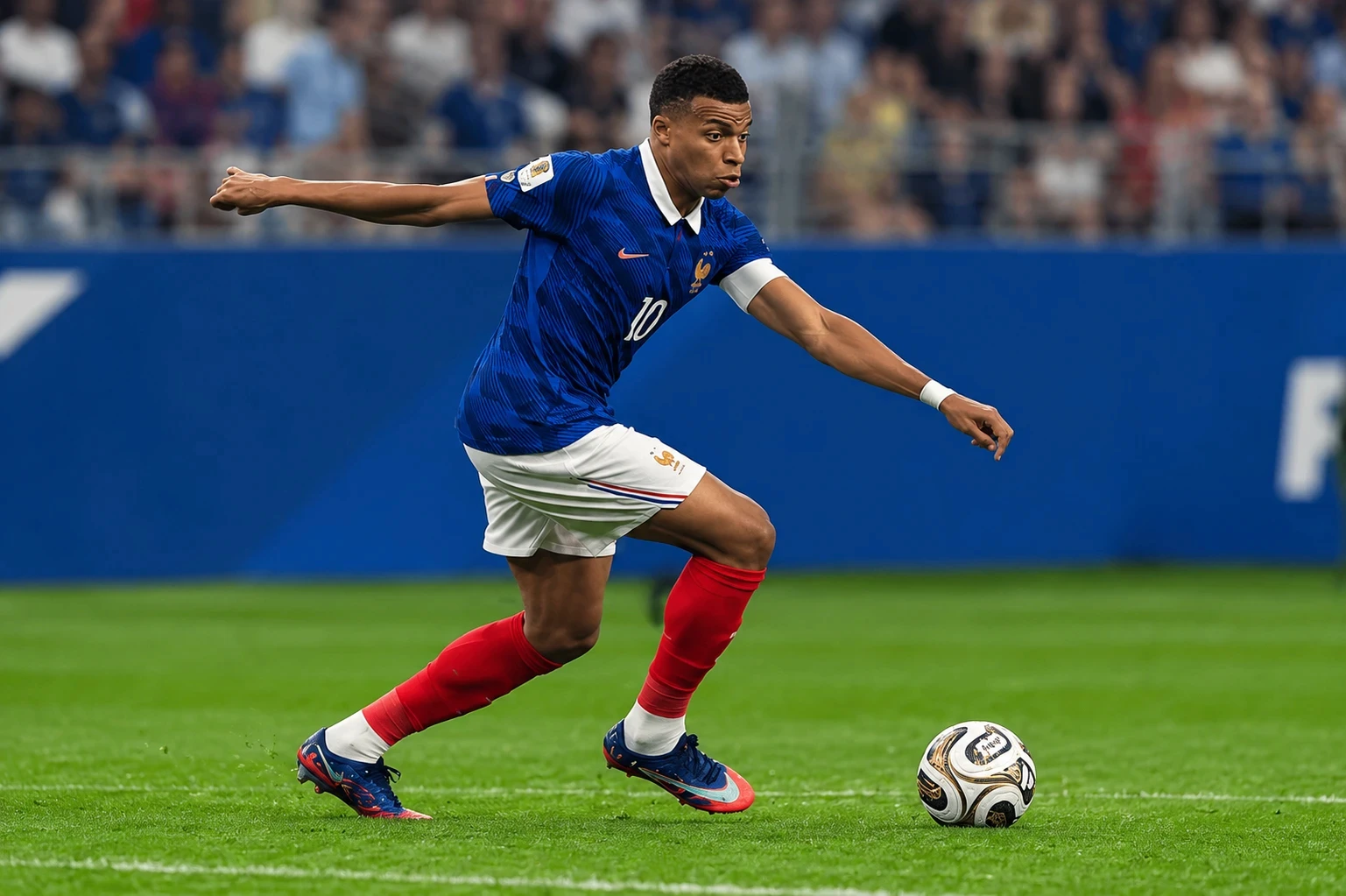
When I saw that Kylian Mbappé had left Nike after nearly two decades to sign with On, my first thought wasn’t about the boots or the irresistible contract. It was about Google. Walk with me ;)
On the surface, it’s another big endorsement deal. However, On isn’t just signing Mbappé to wear its logo. It is entering football, with Mbappé at the centre of that entry. According to On, he will work directly with its product teams on future football footwear and apparel, and Thierry Henry has joined as Director of Football. In its own words, On is entering football:
“to challenge the status quo, bringing our unique DNA of performance innovation, Swiss engineering, and premium design to the game.”
I love that, because it’s a genuinely daring position to take. Football isn’t an empty market. A challenger brand entering it needs attention, credibility, cultural relevance and, increasingly, to be discoverable. That’s where SEO gets interesting.
From “On Running” to “On Football”
On’s search presence has been built around running shoes: “On Cloud”, “On Cloudmonster”, “best On running shoes”. It works. In 2025, On reported more than CHF 3 billion in net sales, with global brand awareness approaching 30%. Hypothetically speaking, “On Football” could become a new business unit.
Football is a different search ecosystem, and Nike has spent decades building it, from “Nike Mercurial” and “Nike Phantom” down to “Mbappé Nike boots”. On can’t expect to outrank Nike, adidas and Puma for “football boots” any time soon. So what do you do when you don’t own the category yet? You create a reason for people to search for you.
The Mbappé Search Effect
When someone sees the headline “Mbappé leaves Nike for On”, they may not care about On, but they care about Mbappé. So they search “Mbappé On”, then “why did Mbappé leave Nike?”, then “On football boots”, and eventually “On football boots vs Nike”. They’ve gone from an athlete search to a brand search to a commercial product search. Kylian Mbappé doesn’t just bring his audience to On; he can create new search behaviour around it.
I did a quick research on Google Trends to see how consumers searched after the move. The queries people searched around Mbappé and On in the eleven days after the announcement read almost exactly like that journey. “mbappe nike” was the top query, “did mbappe leave nike” broke out from nothing, and searches for “on football boots” rose 2,600%, with “mbappe on football boots” up 4,050%.
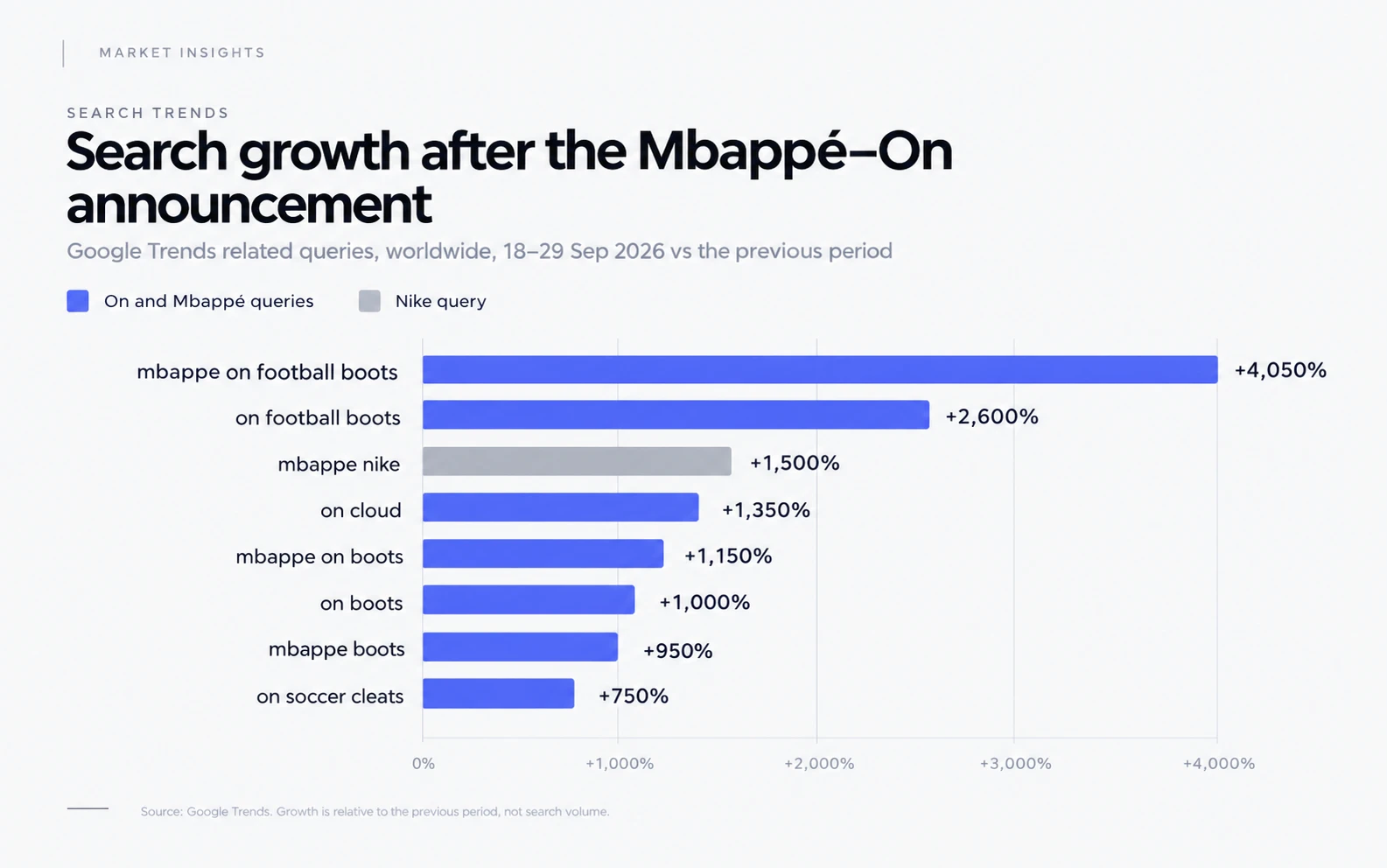
From the image above, one detail stands out: “mbappe nike” still outranked every On query. In search, Mbappé still belongs to Nike, and that’s exactly the association On now has to win. It also turns the classic athlete-marketing model into a longer journey:
Mbappé → Awareness → Search → Brand Discovery → Consideration → Product → Conversion
Even someone who doesn’t buy has entered On’s ecosystem. Sales are great, but dig deeper with some patience and you’ll find something greater: did Mbappé change what people search for when they think about On?
The Authority Effect
When one of the most recognisable footballers of the modern era changes boot sponsor, everyone writes about it: football media, business press, fashion titles, fans. The deal was covered internationally, and thousands of pages now link On with Mbappé, football, football boots and Nike.
That’s about more than backlinks. Google increasingly understands relationships between entities, not just keywords. Mbappé is an established football entity; On is an established sportswear entity, albeit in running. Putting them together gives On a new place in the football conversation.
But There Is a Catch
Attention doesn’t automatically become authority, and authority doesn’t automatically become sales. On can have Mbappé, Thierry Henry, Sydney Schertenleib and millions of impressions, but consumers will eventually ask: “Are the boots actually good?” and “Are they worth the money?” A brand like On would know this. Mbappé isn’t just the marketing asset; he’s part of product development, and that gives the product credibility.
If this partnership works, On proves you don’t need decades of football heritage to win a place in the category. If it doesn’t, it may learn that awareness is much easier to generate than credibility. Either way, there are lessons to be learnt. The signing of Kylian Mbappé will undoubtedly drive content: content drives search, search drives traffic and data, retargeting drives conversion, and conversion builds brand equity. SEO sits right in the middle of it.
What I’ll Be Watching
The obvious question is how many boots Mbappé will sell. If I were in On’s SEO and performance team, I’d watch these over the next 12 to 24 months instead:
Branded search: does interest in “On” grow beyond running?
Football search demand: does On start appearing for football queries it had no link to before?
Organic visibility: is it gaining rankings for informational and commercial football keywords?
Earned authority: are high-quality sports and business publications linking to On?
Cross-category behaviour: do people who found On through Mbappé explore its other products?
Commercial performance: does attention turn into waitlists, purchases and repeat customers?
The hardest question of all: can On turn temporary attention into permanent brand equity? Mbappé can open the door, but On still has to build the room.
More Than a Billboard
On has already challenged the giants in running. In football, it isn’t pretending to have heritage; it’s building a story around innovation, design and elite athletes. Mbappé is the bridge to football, to a new audience, and to a new set of search queries. So when I think about Mbappé leaving Nike for On, I don’t just think about the boots. I think about the search bar.
Sometimes the most important thing an athlete can do for a brand isn’t to make someone buy something. It’s to make someone look for it.
Sources
Google Trends, related queries for Mbappé and On, worldwide, 18–29 September 2026
On, On Enters Football alongside Kylian Mbappé
On, Football FAQ: Why is On entering football?
CNN Business, On signs French football star Mbappé
Cover photo: Bryan Berlin / WikiPortraits, CC BY-SA 4.0, via Wikimedia Commons (cropped)
Related
Nike Rank Watch: what moves a giant’s rankings
More to Discover

When Mbappé Left Nike, I Started Thinking About Google
Kylian Mbappé’s move from Nike to On isn’t just an endorsement deal, it’s a market opportunity. Here, I cover what it means for the future of On.
Insights
When I saw that Kylian Mbappé had left Nike after nearly two decades to sign with On, my first thought wasn’t about the boots or the irresistible contract. It was about Google. Walk with me ;)
On the surface, it’s another big endorsement deal. However, On isn’t just signing Mbappé to wear its logo. It is entering football, with Mbappé at the centre of that entry. According to On, he will work directly with its product teams on future football footwear and apparel, and Thierry Henry has joined as Director of Football. In its own words, On is entering football:
“to challenge the status quo, bringing our unique DNA of performance innovation, Swiss engineering, and premium design to the game.”
I love that, because it’s a genuinely daring position to take. Football isn’t an empty market. A challenger brand entering it needs attention, credibility, cultural relevance and, increasingly, to be discoverable. That’s where SEO gets interesting.
From “On Running” to “On Football”
On’s search presence has been built around running shoes: “On Cloud”, “On Cloudmonster”, “best On running shoes”. It works. In 2025, On reported more than CHF 3 billion in net sales, with global brand awareness approaching 30%. Hypothetically speaking, “On Football” could become a new business unit.
Football is a different search ecosystem, and Nike has spent decades building it, from “Nike Mercurial” and “Nike Phantom” down to “Mbappé Nike boots”. On can’t expect to outrank Nike, adidas and Puma for “football boots” any time soon. So what do you do when you don’t own the category yet? You create a reason for people to search for you.
The Mbappé Search Effect
When someone sees the headline “Mbappé leaves Nike for On”, they may not care about On, but they care about Mbappé. So they search “Mbappé On”, then “why did Mbappé leave Nike?”, then “On football boots”, and eventually “On football boots vs Nike”. They’ve gone from an athlete search to a brand search to a commercial product search. Kylian Mbappé doesn’t just bring his audience to On; he can create new search behaviour around it.
I did a quick research on Google Trends to see how consumers searched after the move. The queries people searched around Mbappé and On in the eleven days after the announcement read almost exactly like that journey. “mbappe nike” was the top query, “did mbappe leave nike” broke out from nothing, and searches for “on football boots” rose 2,600%, with “mbappe on football boots” up 4,050%.
From the image above, one detail stands out: “mbappe nike” still outranked every On query. In search, Mbappé still belongs to Nike, and that’s exactly the association On now has to win. It also turns the classic athlete-marketing model into a longer journey:
Mbappé → Awareness → Search → Brand Discovery → Consideration → Product → Conversion
Even someone who doesn’t buy has entered On’s ecosystem. Sales are great, but dig deeper with some patience and you’ll find something greater: did Mbappé change what people search for when they think about On?
The Authority Effect
When one of the most recognisable footballers of the modern era changes boot sponsor, everyone writes about it: football media, business press, fashion titles, fans. The deal was covered internationally, and thousands of pages now link On with Mbappé, football, football boots and Nike.
That’s about more than backlinks. Google increasingly understands relationships between entities, not just keywords. Mbappé is an established football entity; On is an established sportswear entity, albeit in running. Putting them together gives On a new place in the football conversation.
But There Is a Catch
Attention doesn’t automatically become authority, and authority doesn’t automatically become sales. On can have Mbappé, Thierry Henry, Sydney Schertenleib and millions of impressions, but consumers will eventually ask: “Are the boots actually good?” and “Are they worth the money?” A brand like On would know this. Mbappé isn’t just the marketing asset; he’s part of product development, and that gives the product credibility.
If this partnership works, On proves you don’t need decades of football heritage to win a place in the category. If it doesn’t, it may learn that awareness is much easier to generate than credibility. Either way, there are lessons to be learnt. The signing of Kylian Mbappé will undoubtedly drive content: content drives search, search drives traffic and data, retargeting drives conversion, and conversion builds brand equity. SEO sits right in the middle of it.
What I’ll Be Watching
The obvious question is how many boots Mbappé will sell. If I were in On’s SEO and performance team, I’d watch these over the next 12 to 24 months instead:
Branded search: does interest in “On” grow beyond running?
Football search demand: does On start appearing for football queries it had no link to before?
Organic visibility: is it gaining rankings for informational and commercial football keywords?
Earned authority: are high-quality sports and business publications linking to On?
Cross-category behaviour: do people who found On through Mbappé explore its other products?
Commercial performance: does attention turn into waitlists, purchases and repeat customers?
The hardest question of all: can On turn temporary attention into permanent brand equity? Mbappé can open the door, but On still has to build the room.
More Than a Billboard
On has already challenged the giants in running. In football, it isn’t pretending to have heritage; it’s building a story around innovation, design and elite athletes. Mbappé is the bridge to football, to a new audience, and to a new set of search queries. So when I think about Mbappé leaving Nike for On, I don’t just think about the boots. I think about the search bar.
Sometimes the most important thing an athlete can do for a brand isn’t to make someone buy something. It’s to make someone look for it.
Sources
Google Trends, related queries for Mbappé and On, worldwide, 18–29 September 2026
On, On Enters Football alongside Kylian Mbappé
On, Football FAQ: Why is On entering football?
CNN Business, On signs French football star Mbappé
Cover photo: Bryan Berlin / WikiPortraits, CC BY-SA 4.0, via Wikimedia Commons (cropped)
Related
Nike Rank Watch: what moves a giant’s rankings
More to Discover
When Mbappé Left Nike, I Started Thinking About Google
Kylian Mbappé’s move from Nike to On isn’t just an endorsement deal, it’s a market opportunity. Here, I cover what it means for the future of On.
Insights
When I saw that Kylian Mbappé had left Nike after nearly two decades to sign with On, my first thought wasn’t about the boots or the irresistible contract. It was about Google. Walk with me ;)
On the surface, it’s another big endorsement deal. However, On isn’t just signing Mbappé to wear its logo. It is entering football, with Mbappé at the centre of that entry. According to On, he will work directly with its product teams on future football footwear and apparel, and Thierry Henry has joined as Director of Football. In its own words, On is entering football:
“to challenge the status quo, bringing our unique DNA of performance innovation, Swiss engineering, and premium design to the game.”
I love that, because it’s a genuinely daring position to take. Football isn’t an empty market. A challenger brand entering it needs attention, credibility, cultural relevance and, increasingly, to be discoverable. That’s where SEO gets interesting.
From “On Running” to “On Football”
On’s search presence has been built around running shoes: “On Cloud”, “On Cloudmonster”, “best On running shoes”. It works. In 2025, On reported more than CHF 3 billion in net sales, with global brand awareness approaching 30%. Hypothetically speaking, “On Football” could become a new business unit.
Football is a different search ecosystem, and Nike has spent decades building it, from “Nike Mercurial” and “Nike Phantom” down to “Mbappé Nike boots”. On can’t expect to outrank Nike, adidas and Puma for “football boots” any time soon. So what do you do when you don’t own the category yet? You create a reason for people to search for you.
The Mbappé Search Effect
When someone sees the headline “Mbappé leaves Nike for On”, they may not care about On, but they care about Mbappé. So they search “Mbappé On”, then “why did Mbappé leave Nike?”, then “On football boots”, and eventually “On football boots vs Nike”. They’ve gone from an athlete search to a brand search to a commercial product search. Kylian Mbappé doesn’t just bring his audience to On; he can create new search behaviour around it.
I did a quick research on Google Trends to see how consumers searched after the move. The queries people searched around Mbappé and On in the eleven days after the announcement read almost exactly like that journey. “mbappe nike” was the top query, “did mbappe leave nike” broke out from nothing, and searches for “on football boots” rose 2,600%, with “mbappe on football boots” up 4,050%.
From the image above, one detail stands out: “mbappe nike” still outranked every On query. In search, Mbappé still belongs to Nike, and that’s exactly the association On now has to win. It also turns the classic athlete-marketing model into a longer journey:
Mbappé → Awareness → Search → Brand Discovery → Consideration → Product → Conversion
Even someone who doesn’t buy has entered On’s ecosystem. Sales are great, but dig deeper with some patience and you’ll find something greater: did Mbappé change what people search for when they think about On?
The Authority Effect
When one of the most recognisable footballers of the modern era changes boot sponsor, everyone writes about it: football media, business press, fashion titles, fans. The deal was covered internationally, and thousands of pages now link On with Mbappé, football, football boots and Nike.
That’s about more than backlinks. Google increasingly understands relationships between entities, not just keywords. Mbappé is an established football entity; On is an established sportswear entity, albeit in running. Putting them together gives On a new place in the football conversation.
But There Is a Catch
Attention doesn’t automatically become authority, and authority doesn’t automatically become sales. On can have Mbappé, Thierry Henry, Sydney Schertenleib and millions of impressions, but consumers will eventually ask: “Are the boots actually good?” and “Are they worth the money?” A brand like On would know this. Mbappé isn’t just the marketing asset; he’s part of product development, and that gives the product credibility.
If this partnership works, On proves you don’t need decades of football heritage to win a place in the category. If it doesn’t, it may learn that awareness is much easier to generate than credibility. Either way, there are lessons to be learnt. The signing of Kylian Mbappé will undoubtedly drive content: content drives search, search drives traffic and data, retargeting drives conversion, and conversion builds brand equity. SEO sits right in the middle of it.
What I’ll Be Watching
The obvious question is how many boots Mbappé will sell. If I were in On’s SEO and performance team, I’d watch these over the next 12 to 24 months instead:
Branded search: does interest in “On” grow beyond running?
Football search demand: does On start appearing for football queries it had no link to before?
Organic visibility: is it gaining rankings for informational and commercial football keywords?
Earned authority: are high-quality sports and business publications linking to On?
Cross-category behaviour: do people who found On through Mbappé explore its other products?
Commercial performance: does attention turn into waitlists, purchases and repeat customers?
The hardest question of all: can On turn temporary attention into permanent brand equity? Mbappé can open the door, but On still has to build the room.
More Than a Billboard
On has already challenged the giants in running. In football, it isn’t pretending to have heritage; it’s building a story around innovation, design and elite athletes. Mbappé is the bridge to football, to a new audience, and to a new set of search queries. So when I think about Mbappé leaving Nike for On, I don’t just think about the boots. I think about the search bar.
Sometimes the most important thing an athlete can do for a brand isn’t to make someone buy something. It’s to make someone look for it.
Sources
Google Trends, related queries for Mbappé and On, worldwide, 18–29 September 2026
On, On Enters Football alongside Kylian Mbappé
On, Football FAQ: Why is On entering football?
CNN Business, On signs French football star Mbappé
Cover photo: Bryan Berlin / WikiPortraits, CC BY-SA 4.0, via Wikimedia Commons (cropped)
Related
Nike Rank Watch: what moves a giant’s rankings